Saturday, June 26, 2010

Changjiji GOODNESS!

we visited the site for Neighborhood Watch today. we've decided that we will be using the projections in the exhibition to blanket the buildings in digitalized rice paddy fields. below the projections, on the metal suddered doors, we will have a seperate set of projections that will stream interviews with the oldest generations of Bhutan, alternating with interviews with the youngest generations of Bhutan. These projections will only show mouths speaking. It is our hope that we'll be able to gather enough projectors to have at least 9 voice installations running at once. the stories they will share will blend into one voice...made of the voices of Bhutan that are falling farther and farther away from eachother as progress threatens "the great divide"'s growth.this particular projection will open and close the exhibition.

today, in the gleaming himalayan sun, tenzin dorji shared his memories of what Changjiji used to be. "This land was all the most beautiful paddy fields in Thimphu. It was green. When i was young we would drive on the road above and look down at the paddy fields. I lived just across the expressway, and when i would look there was nothing here except the old homes that you can see [behind and amidst] the new buildings." later on, as we are walking toward the expressway to get a cab back to town he says quietly, "i suppose cities always change..."

it is tenzin's memories of Changjiji that have sparked our desire to show Changjiji as it once was, using projection. Bhutan has changed drastically...those changes have been most drastic in Bhutan's capitol city...and, as Bhutan approaches development carefully, as I talk more with the artists who will participate in this exhibition I realize more and more that the Bhutanese truly hope to 'develop' respectfully and with dedication to the Bhutan that once was. Their land and values are indeed a part of them...and when I hear people reflect on the changes that have swept into Bhutan I can't help but feel frustrated and truly touched. Does anyone else speak of their land so beautifully and honestly? Is there any place left in the the world that is EVEN ATTEMPTING to approach modernization the way Bhutan is?
................................................................................?

Tensin remarked, "when the buildings are built they don't actually think about it. they just build. there is no green left in changjiji...and these buildings have not even been planned for."

along with the tremendous visual presence this housing complex has, Changjiji is also Thimphu's most fragile neighborhood. It has fallen victim to the effects of rapid modernization...poverty, gang violence, drugs, general "youth problems"...all these issues, which didn't used to exist in Bhutan...are festering in Changjiji. With the help of the Royal Bhutan Police, a new law enforcement outpost has been built in Changjiji. the crime rate has fallen according to young children who Tshering Dorji talked with while we visited the site. however, "the gangs still fight on the other side of the housing complex, opposite the police outpost". theft and burglary are still a problem and the children of Changjiji are often found skipping school or performing poorly. unhealthy domestic situations are still present and presence of gangs (and their influence) is still an issue. along with work that will reflect physical change and the passage of time in this kingdom, work will also reflect the social changes that have occurred...

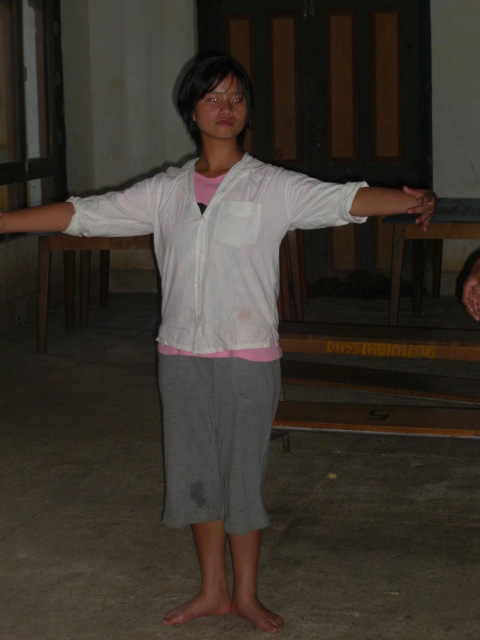
i share some photos of the sight with you all.

as always...there is more to come!

i send my most excited greetings from the beautiful Kingdom of Bhutan!

Thursday, June 24, 2010

Neighborhood Watch

I've been hesitant to write about this because I haven't been sure whether everything would come together. After meeting with the (FANTASTIC!) artists from Dato Creative studio and Happy Valley, I am full of hope and excitement.


Thimphu, Bhutan (in collaboration with at least 10 other cities across this crazy planet) will be initiating its first ever completely public projection art walk project. "Neighborhood Watch:A Projection Walk" will be held in Thimphu BHUTAN, El Paso TX, Tampa FL, Austin TX, San Antonio TX, Seattle WA, Oslo NORWAY, Copenhagen DENMARK, Paris FRANCE, Melbourne AUSTRALIA and Juarez MEXICO (this one is pending on account of the current safety situation, but it is my hope that we can find a way to execute the project safely...fingers crossed everyone).

I'll give you all some background on the project:

eighborhood Watch was initiated by Chelsea Goodwin in Tampa, Florida. It was inspired by the “Lights on Tampa” exhibition. a group of graduate students from the University of Florida came together and began discussing the possibility of mixing classic American drive-in theatre, some delicious grass roots organization and the kind spirit that is naturally shared when we are members of a common community together to create a public work exhibition. the initiative was aimed at sharing art with the public using complete access as its method.

in 2008, Jaime Carrejo, who was an original member of the planning group in Florida, moved back to his hometown of El Paso to take a professor in residence position at the University of Texas at El Paso. it was there that he and I met and decided to take on the challenge of such a project.

along with projections, we installed three-dimensional work in participating neighbors’ yards.

in 2008, the project was coordinated between El Paso and Florida and was submitted to the VISION 08 Festival in Chicago that year.

the ultimate goal of the project was that every time an artist relocated they could initiate the project in the city where they were based. in this way the project was to spread to multiple cities across the U.S. with dedication to the spirit of sharing life through art.

the method:
digital images of art work are projected onto the exterior walls of homes and three dimensional work is installed in the yards of homes. everyone (the public, the artists and all inhabitants of the city and environment) is invited to watch and talk as they took a walk amongst the art work. the project hoped to spark conversations, questions, ideas and perspectives that could be shared in this process.

ephemeral art:
ephemeral art does not exist permanently. It lives for a brief moment, or perhaps a long breath and then it’s gone. this exhibition, by nature is ephemeral. it is installed in one day and it opens for a single night. the public is invited to join Neighborhood Watch in viewing, interacting with and discussing the art work that is exhibited. the art work, the discussions and the ideas that are raised during the exhibition flourish through the night and, if successful, the exhibition opens up topics of discussion and a sharing of ideas that will carry on after the exhibition has closed.

non profit ideals:
there is no monetary compensation for this project, only general wonderful feelings that come with sharing our work with our neighbors around the world.

Now,when i decided to come to Bhutan I had to be certain of what i wanted to do while i was here. i was going to work with youth. i was going to teach sculpture. i wanted to discover the many ways in which art can help us live alongside them. i look back now and i realize, that while the children at VAST have developed their abilities to think three-dimensionally, that lesson is perhaps a tiny shimmering flicker in a sea of very beautiful and booming stellar lights! with two months left in Bhutan, i smile. i believe that we took on this adventure together and we have all learned so very much. (we of course referring to the 200 plus young people i've worked closely with during my time in Bhutan...and some lady named xochitl) perhaps, when the time is closer for me to depart...for me to return... i'll share in more detail what precisely i have learned and what i hope they have learned.

right now, however, i will say that i only hoped i would be able to reach a point in the project to be able to introduce something like "Neighborhood Watch" in Thimphu. in all honesty, i've only just realized how much Neighborhood Watch, in many ways, has shaped my own hopes for art...and the hopes i have for whatever work i make in my life. the sheer thought of being able to offer Neighborhood Watch to these beautiful Bhutanese people gives me goosebumps.

Neighborhood Watch exhibits work that is a reflection of your time and place in the world. initially, the idea was that participating cities would have live feeds going down...and each city would be connected via cyber space. so...essentially, by attending one exhibition in your own city, you had a chance to attend the exhibits in the other cities. and if the work submitted is effective, you get to have a glimpse into the life of worlds you don't live in. unfortunately, due to technical difficulties, we've had a hard time making this live feed work. and now, considering HUGE time zone differences, live feeds will be difficult. however, we're working on getting a website operational so that whatever is missed due to physical challenges can be viewed on the website.

the project is incredible and often times, i have trouble even getting my head around the tremendous power of such an exhibition. in bhutan, specifically, i am truly overwhelmed with the potential of such a project. this exhibition will be the first of its kind in bhutan. my goodness!...this exhibition is Bhutan's 'first' in many ways. as i wrote in one of my first blogs, 'contemporary art' is a completely foreign entity in Bhutan. a great majority of Bhutanese have never seen a single piece of contemporary art--eastern or western. most arent aware of how art has shaped the world...how art CAN shape the world, echo the world...make the world. considering Bhutan's present situation (the situation that involves the big huge world meeting Bhutan's protected safe and beautiful world) the work that will be created for this exhibition will be unlike any other work submitted...the potential for these participating artists to reveal so many truths about the world is tremendous! we've discussed briefly during our first few meetings the duality of Bhutanese existence. Bhutan is living in two worlds at once. Bhutan is living in two 'times'.

It is important to keep in mind, drastic and rapid urbanization is one of Bhutan's most significant issues presently. I suppose one could argue that is THE broad issue from which every other issue stems. For Bhutan's leg of the exhibition, I proposed we hold Neighborhood Watch in Changjiji neighborhood and the members of the collective here agreed that it is IMPORTANT and NECESSARY to hold the exhibition there.

I'll be "co-facilitating" a workshop in Changjiji (or Changjiji 'housing complex' as it is referred to here) in July. i'd like to share some of the background on Changjiji as it was written in the proposal i recieved from Sonam Palden, a teacher at Loselling Lower Secondary School in Changjiji:

"The Housing Complex is known for its diversity of social background and quite recently it has infamously captured the headlines of our national newspapers. The Royal Bhutan Police felt the need of outreach station at the complex to curb and prevent the diverse social problems and it soon opened an outreach police centre at the hub of the Housing Complex. The crime rate in terms of vandalism, car-hijacking and other stealing acts, etc. apparently has drastically reduced. However, the problems associated with drugs and gangs have virtually boomed. The number of early school-leavers seemed to have increased and their influence on our school children is quite staggering and pretty alarming. Within last three months the number of our students abusing cigarette, drugs and other psychotropic substances has inexorably escalated. The gang fights have frequented injuring our young children and nocturnal gang prowling has literally posed grave danger to the late night commuters. Due to the support of the hard-core gang- bangers (early school-leavers) at the Housing Complex, the amateurs in our school are questioning the safety of other innocent children. They are often bullied and extorted and very few of such cases are reported to the school management. This has really debilitated some of our children who often insist to play truant just to elude these gang bullies.

Through our survey study and analysis of the ground situation while closely working with our abusers and gang-members, we came to learn that the to learn that children as young as 10 years old are into abusing substance like marijuana, tablets, all kinds of tobaccos, other psychotropic substances and even precursors. We have wide range of abusers and gang members irrespective of gender and age. The findings of our school counseling division reflect that many of the abusers are low academic performers and directly or indirectly they have very close connection with the notorious early school-leavers
residing in their residential vicinity.

The school has done all it can to accommodate to the needs of children with special needs, but it has been an uphill climb, for the school does not receive any support nor cooperation from the parents since most of the time their parents are defensive of their children. The school is guardian to three students who are completely neglected by their parents. Students are counseled by the school counselors but are worried that the students might need more than a few hours of counseling. Through our close observation and thorough analysis of each individual abusers and gang member and other problems either by influence of senior abusers or available of the superfluous of unsupervised free time. Many of them lack parental guidance since many parents come from mediocre or low income group who often entail working late hours. It is also known that majority of our children with special needs are rooted to broken families and dependent on their relatives who often maltreat them. In 2008and 2009, we had two cases of suicide which had close link to the problem deliberated here. The problems mentioned here are further aggravated with the complete dearth of recreational facilities and avenues where children can positively take part and keep themselves aside from gangs and drug abusers. Though we have a outreach Youth Centre at the Complex but truly it is not able to cater to the needs of our children with such needs. In fact, it cannot and it is impossible since the youth population in the Housing Complex is extremely high and they go to almost all the schools in Thimphu bringing up with them their own problems and these problems are infecting our children causing the pernicious impact to our entire school population. Literally our children are in great stake and we strongly feel the need of some viable solution to combat these problems. It is not just the concern of the Changjiji Colony, but a concern of entire society since these children would have an invasive adverse impact on the future of our nation. It is our responsibilities and duties to prevent them from going astray and however if they are already plunged into these problems then we must think of ways to help them."


what will we all say to eachother?
(thimphu and the other cities...and of course all of you!)

what will we reveal?

what will we conceal?

what will we feel?

what will all this make us say?

the reception of this exhibition in Thimphu is unpredictable. i'm sure...well...i'm sure we'll just have to see!

i do hope, if you keep up with this blog, you'll join us on August 21, 2010 for "Neighborhood Watch:A Projection Walk.

as things develop i will happily share the exciting news with all of you. tomorrow, we will be meeting and visiting the neighborhood together...in the name of positive progress and art!

as always...there is more to come.

i send my warmest greetings from the Kingdom of Bhutan!

Sunday, June 20, 2010

"meeting and departing is natural phenomena"

thick clouds are swallowing the mountains again. soft rain falls and the occassional car drives slowly down the sloping road outside the window. there's a stillness and a silence laying itself over the city...and in my own calmness and stillness, i remember, "xoch...share!"

i have no idea where to begin! since i last wrote many beautiful things have happened in this crazy himalayan land. i'll focus on one particular stream of events...Freg flew away back to Australia on Saturday. i sat back trying to figure out what i was feeling having said goodbye to the second very dear friend I have made in Bhutan. The Reb stayed for four months and looking back it almost seems like she was only here for a blink. Freg was here for three months and i'm sure with a little bit more time, his time here will also seem like a blink. just as, i'm sure, when my time here ends i will feel as though it was also a blink (probably longer blink, but a blink nevertheless). the beauty about these blinks, however is that they're not like a regular blink. they're not the normal involuntary action our eyes perform to clean themselves. these blinks are the kind that allow your eyes to open back up to the sun. I would never say i was seeing darkness before all of this, but i can absolutely say that after having met both of those beautiful people i can see a little bit more clearly now. there's a little bit more sunlight behind this Himalayan mist.

the Four Friend's Theater Club had its final performance (collaborating with me and Freg) and it was incredibly successful! Her Majesty the Queen Mother Tshering Pem Wangchuck attended YDF's foundation day celebration as the guest of honor. Along with Her Majesty, His excellency Prime Minister Jigme Y. Thinley was in attendance as a distinguished guest. Ministers and heads of government were also in the audience as well as teachers, writers and a handful of young people. Her Majesty was very pleased with the work Freg and I had accomplished with the "Four Friends Theater" participants and bid Freg and I her farewell for the night with thanks, hugs and kisses. it was a huge honor to be able to show her what the 13 of us had accomplished first hand. I have to thank Tshering Tobgay, Bhutan's Opposition Leader for his participation in the performance...he did a wonderful job.

these last three months were the most touching, difficult, beautiful and powerful months i have been a part of in Bhutan. if there is any higher honor than to be given an opportunity to share our work with Her Majesty I would say, with confidence, it was my greatest honor to have the opportunity to work with such incredible young adults. having met the members of Happy Valley has revived my hope in the joy of sharing, learning and giving. the co-operative itself, faces a lot of internal issues. each member is an example of one or more of the many faces and levels of the "youth problem" in Bhutan. they haven't been paid in months, but they go forward clinging to the hope that the work they do will help someone and eventually provide them with a means of survival. since i've met them, they've lost two members of the co-operative and tshering, the blow horn, never fails to fall silent for a moment when he reflects on what may become of Happy Valley. i always only smile and reassure him that such beautiful things always survive...one way or another.

i could never be more grateful that they were willing to donate their time to working with me and freg through YDF. the more familiar i become with their situation and each member individually, the more i understand the sacrifice they made to make the project a success.

we spent three months together, thinking, analyzing, questioning, imagining and planning. youth issues were our main focus. we DISECTED the "youth problem" in bhutan as thoroughly as possible and to the best of our combined abilities. we pulled together our observations (which were incredible to witness as they came together, considering the different perspectives that were working together), we pulled together personal experiences and most importantly, we learned about each other's lives. the final product of the workshop was a drama depicting a group of four friends (honoring the traditional Buddhist story of the four friends, Thim Pha Pin Zhi) who were trying to start a youth co-operative in Bhutan. Considering the group of young people who were participating in the workshop-all Happy Valley members and the bright and engaged Sonam Wangmo-we were able to frame the drama accurately according to the problems Happy Valley has faced as Bhutan's first co-operative organization and according to the problems each participant was facing or had already faced at some point in their lives.

The four characters in the drama were the elephant, the monkey, the rabbit and the bird. Each character was dealing with their own issues...issues which were interfering with the organization of the youth organization. the elephant, who was given the task of recruting new members for the youth group faced substance abuse issues. the monkey was assigned the task of fundraising for the group, but failed to do so when he caved into materialism and the loss of a value system. the rabbit had trouble focusing on organizing the youth group because her circumstances forced her to seek work in a drayang (entertainment bar) which led to her exploitation as a dancer and singer. the bird, who was the leading figure in the co-operative faced obstacles working with the bureaucracy in Bhutan while he tried to help his three friends overcome the issues they were dealing with.

the performance was based upon forum theater, which you can read about in one of the previous blogs. each time the participants performed for an audience, we called on members of the audience to replace these main characters and make the choices that were necessary to change the outcome of each act for the better. thanks to support from YDF, the performance was offered to "Young Volunteers in Action" (another program intitiated by YDF)in Thimphu, Punakha, Bumthang and Tsirang. Each performance in the different dzongkhags had its incredible moments as youngsters acted out their own real life solutions to the problems we were presenting in the drama. there are, however, two particular performances i know i will never forget.

The Early Learning Center in Thimphu invited us to have a rehearsal performance for their students about a month ago. The elementary school is the only school in Bhutan educating its students through a value based curriculum. There are beautiful things happening at the ELC and the folks there deserve great commendation because they have taken the idea of Gross National Happiness and are educating their students with dedication to the principles of GNH. We were a little bit nervous, considering these children were younger than our intended audience of YVIA (young volunteers in action) members... but we were also very excited because the innocence of children always offers some of the world's most valuable lessons.

During the drug addiction scene, a young boy who was maybe about 8 years old took to the microphone with enthusiasm, replacing the naughty elephant. the elephants friend, who was overweight and glued to a video game, was the target for the elephants recruitment efforts on that day. whhen the young boy took the stage he tried to distract his friend from buying drugs using several different methods. finally, the clever boy grabbed the television and ran off with it. the overweight friend, of course, wound up leaving the video game parlor where the drug dealer was and chased the boy who was running off with his t.v. it was a beautiful sight to behold! such a simple act pointed to so many more complicated levels of the problem. the little boy understood that the environment was as poisonous as the drugs would be. he understood that by removing his friend from that environment he could more easily place him in a healthy environment.

i also witnessed a very beautiful moment in Tsirang.

after hours of acting out possible solutions for the scene which addressed drug addiction,the final solution that resolved the issue was meditation. a young man took to microphone and immediately refused to give his friend money to purchase drugs. he invited the drug dealer and his friend to join him in meditation instead. he sat down beside them, on their level and led them in meditation. the two supporting characters finally calmed down (they had been pushing the boundaries of their characters for a few hours...resisting the solutions the Tsirang students were offering). Within a few seconds, i looked around and realized that the entire room of 150 students had joined the meditation. the entire day had been filled with laughter and sound, and suddenly, the entire auditorium fell silent. as i write this nearly three weeks later i still feel goosebumps spread across my skin.

this solution was beautiful for a few reasons. the drama of that moment was absolutely breathtaking. this solution also silently addressed the idea that it is difficult to take help from someone who is not willing to place themself beside you but instead prefers to help you while towering above you. a young lady had tried the same solution but did not sit with the two young men. she stood above them and instructed them in meditation. when the second volunteer took the mic, he immediately sat between the two young men...and they immediately closed their eyes with him. The solution was also beautiful because it was a very Bhutanese way to solve the problem. a solution like this would probably never work in the U.S., but the moment i heard silence come over the room i knew...we've done it!

the remainder of our day in Tsirang was spent singing and dancing together. we were careful to select only the scenes that depicted problems that were relevant to each group of youngsters. in thimphu, all four scenarios are relevant, however, in smaller and more rural dzongkhags like tsirang, the only scenarios we felt were appropriate were substance abuse and materialism. the shortened performance schedule gave us an opportunity to split the group of 150 into smaller groups to discuss the issues they felt were most relevant to them. i was pleased to share a discussion with a group of about 15 youngsters who, by the end of the discussion, understood that the issues they are facing having many causes and effects. they understood that the issues they are facing are multi-layered and that it is important to understand the MECHANISMS that propel problems forward. each group was able to develop a short act on the issues they discussed. alcoholism, which led to divorce, which led to youngsters joining gangs was a common thread of issues. through discussion, the group i worked with proposed that perhaps, in order to stop the gang problem, issues of alcoholism could be addressed that would lower divorce rates and therefore lower gang membership. they proposed a law that called upon "owners and servers at bars to have a limit on the amount of alcohol they serve their customers. if a customer was already intoxicated, they should not be served more." HOORAAAYYYYY!!!!

after this, i jumped up and down several times and we made a slogan to help them think about things simply in the future (in case no one was around to think about things with them).

"what is happening
why is it happening
what do i want to happen!?"

we closed the formal portion of the workshop with all 150 YVIA members asking these questions in unison...and then came the fun!

the youngsters sang for us and danced and by the end of the day (nearly 10 hours later) they were asking me to teach them ballet. by seven o'clock in the evening, i stood before 6 brave kids, teaching them the basics of classical dancing.

after about an hour and a half, i decided to end the ballet class (so as not faint!) and go outside to enjoy the jungle. the night was spent with eyes wide open hiding within my sleeping bag. tsirang is warmer so there are bird-sized mosquitos in its jungle...iill avoid going into the details of the other flying objects i saw...but am happy to share that, with my AMAZING luck, i had the fortune of sleeping under a very confused very humongous flying object. for fear of it falling on me in my sleep i opted to stay awake. (a great portion of the morning was spent laughing at myself with the girls who were sharing their room with me).

the next morning we loaded ourselves on to the bus hesitantly. we did everything we could to prolong the goodbye. we sang more songs...we took photos...we told more stories and exchanged addresses. after some time i realized i should board the bus before any waterworks started going down, so i made my way for the bus door. as i approached it, beautiful young Jamyang approached me with a note in her hand for me. i held it tightly and promised i would read it on the road. hugs were had and we headed off, feeling full of hope and full of sadness that we couldn't stay longer...

as we made our way around the first bend...i opened up the note Jamyang had timidly handed me.

it read:

"Dear Sochi Sister:
I, Jamyang Sekar would like to thank you all for a wonderful programme. Yesterday we enjoyed a lot. Now I can make out what to do and what not to do. I especially enjoyed your dance (ballet dance).

As a saying goes "meeting and departing is natural phenomena". So have a safe journey and hope to meet you all soon.

We will be missing you all.

Love you, miss you
and please take care, Sister.

Goodbye..."


as always...there is more to come.

i send my warmest greetings from the ever lovely Kingdom of Bhutan...

Monday, May 17, 2010

over one hundred thousand selves of we.

the land of the thunder dragon is roaring. the sky is crying on the land, making music against the metal roof of the building where i sit and write. i am of the desert. the thunder there whispers hints of a roar from miles away. the clear vast nothing that stands in the way of its voyage carries its whisper gently until it is above my head rumbling and cracking. the journey of the desert dragon is one i can see, hear and feel on my skin as the thunder moves like a long train toward me. when there are storms in el paso, i sit one block away from my mother's home on the edge of an arroyo. lightening crumbles the distant sky and the rain descends, cracking hot air with water. the ground cools as its heat rises up my spine. the gobernador that blankets the arroyo sighs with relief and releases its magic perfume into the air. this is the smell of the desert rain. the desert begins its dance, erasing the heat and the tense thinness that lives in that desert air.

in bhutan, the world lives on the edges of cliffs. there is nothing mild here. sounds contradict one another as silence carries distant dogs' anger and mad drivers' signals. bark bark honk bark honk honk.

there is nothing mild here.

the mountains boom above me...erasing me from any map that may exist within the eyes of stars. clouds consume the mountains and their booming shape flattens into dense white softness. evidence of eager winds flaps in scripts on squares of color. the earth surround me as it protects hides and reveals the details that dwell in my soul. in moments like those i wonder, "does this place really exist...so blanketed with such tremendous peace and calmness?"

i remember the distant suffering that recently dug its cave into my finger tips. they have only tin and holes above their heads. they live within walls of woven bamboo and brittle plastic. the light and shapes in this place crash into the telescopes of my eyes as i wander through this valley. clumsy memories do not stand a chance against this world that lives on the edges of cliffs. in my skilfull moments, clumbsy memories finally move out of sight, retreating into their land of smoke and mirrors...and the contradictions of this world within mountains crash into the telescopes in my eyes.

there is nothing mild here.

the rain has picked up its pace. blankets of water fall now, hurrying and begging. the sound of rain on metal overpowers the fumbling voice in my mind. all sounds are overpowered by the persistent rain. the soft rhythm of my music fades away and this shhhhh is loud and constant.

the desert flooded once. my brothers and i walked down a slippery slope to see a river madly flowing through the arroyo. the city fell to pieces. rivers carried buildings and the mountain down down down toward the river into the growing sea of smooth desert mud that filled the valley furiously and relentlessly. rivers swallowed streets and carried unpredictable boats down down and away.the desert must have been so thirsty. but these mountains, in the land of the thunder dragon...are they also thirsty? are they so angry? this loud and constant shhhhh is not born of an angry cloud. it is simply born for these spaces between high earth. this loud and constant shhhhh is meant for this place.

the rain's pace has slighty slowed. i hear its grip release from the metal roof. the dragon discourages the slowing of the rain with another roar. i hear it bounce between the walls of the valley, but the rain continues as it wishes. one more roar bursts down from the clouds and the rain is at the mercy of the dragon. the wind advances in fast circles and the rain begins to argue. its pleading with the dragon now...to let it slow down.

the desert's dance is different. it slithers slowly, gracefully, happily along as awkward water falls from the sky. that grace is only interrupted by the sound of thunder rising sharply from the flatness of the earth...i don't think it booms down from the clouds in the desert. the sun shines in the distance running from clouds that are begging to burst at their seams. the clouds are tall giants carrying symphonies. they chase the sun light away. they're trying to soften the desert.

i remember when the hardness of the desert got me. there was a time i fought with my mother. i ran out the front door in bare feet chasing madness (as i used to do). the sun was beaming that day...screeching with heat. the black asphault the men had laid down only days before was glimmering with wicked laughter. it carried the sun's torturous song in its tar. my feet ran fast at first. i didn't feel anything...my mind followed the sounds of the stillness that madenned and steered my course. around one bend around another... the asphault got me like a snake! it sent needles into my feet begging me to stop. i stood in the shade of a telephone pole...angry. i should have heard the snake long before it got me. (in the desert you learn the sound of snakes as a mini.) i paused, regretting my temper and kept running. the asphault ignored the melting souls of my feet. i took to shade again, perched atop the diagonal firm shadow of another stark and straight telephone pole. i reached home and my mother stood within the shimmering grey light of the house waiting. i teeter tottered up the walkway and left my feet soaking in the blue bath tub of her bathroom. the desert has no mercy.

merciless sun exists in these mountains too-dancing upon slate in your bare feet also makes their souls melt. but here, the sun's heat vanishes as quickly as it appears. while the sun shows no mercy the clouds certainly do. when the thunder dragon begins to roar not even the sun is brave enough to stay. he commands the tense strings in the air to fall. he carries the rain within his belly and spills his insides magnificently over one hundred thousand selves of we.

the rain's complete conscious tenderly sleeps over the valley now. the roar with which it came skillfully and delicately disappears and the rain settles in its motion. the sound of wheels over water whispers thank yous toward the sky. it will rain into the night.

Wednesday, May 12, 2010

"the blow horn"

along with the previous post that shares an article featuring Happy Valley, i also wanted to post this profile. Drukpa magazine also wanted to do a profile story on one of Happy Valley's founding members, Tshering Dorji. this young man is incredible. often times, when freg and i speak with him we leave the conversation wondering where in the world he is ACTUALLY from. he is full of insight and he has a really incredible understanding of the way things function, they way the should function, how he wants them to function and how to get them to function that way. he scorns the meer thought of passing judgements on people, truly believes in democracy and equality and always ends his paragraphs with a joke and some laughter...even if he is discussing the heavy duty nature of the details of the Bhutanese youth situation.
on several occasions he's told me and Freg, "the situation is a very frustrating one in Bhutan. things are just this way...they shouldn't be, but the system functions in such a way that its very difficult to fix things....especially if you're young and don't work for the government." the look on his face tells me he wishes he could fix it all, but the words he uses tells me he knows all he can do is work with the opportunities he is given...and try to make new opportunities everyday for Happy Valley.
Freg volunteered to write a profile on Tshering. I also wanted to share that with you all...
THE BLOW HORN

Tshering Dorji was born in 1981 in the village of Jagarthang just outside of Paro. He graduated from high school but received poor grades- an experience that he feels strengthens the argument for having creative as well as academic career paths available to young people in school:
‘That’s why I feel bringing more art and drama into Bhutan would be so useful, to provide a pathway for people like me that are meant for this discipline, rather than a more academic path. It would also be wonderful to convince parents and others that by choosing performance as a profession, their child could contribute to society just as much as if they were a doctor or engineer’.
Tshering had a passion for acting from an early age, but did not pursue the profession immediately upon leaving high school- instead he began work as a tour guide. Working as a tour guide he was able to earn enough money in three months to buy a car. But at the end of a day of quick earnings, fancy dinners and fancy hotels, he would go to bed feeling that this wasn’t what he was born for. But he is thankful to the profession for giving him the financial base to pursue his passion for theatre- and having a car is very useful for dropping off fellow performers- without one it may have been much harder to convince them to stay for late night rehearsals!

In 2005 Tshering took up an opportunity to receive training from visiting Fillipino drama specialists in a workshop program organised by Tshering Gyaltshen- the result of the training program and subsequent performance tour, sponsored by ‘Save the Children’, was ‘The New Theatre Company’. Tshering is grateful to Tshering Gyaltshen for providing this initial spark for street theatre in Bhutan, and continues to admire the new ideas and social messages that Tshering Gyaltshen promotes in both his films and theatre work- the beneficial impact of this work in the lives of youth in Bhutan is an inspiration for Happy Valley’s own activities.

Tshering’s first cinematic acting role was in the movie ‘Layngon Bum’. He had learnt during his time studying drama of the differences between live drama and film, but only came to truly understand this distinction by experiencing it. He has subsequently decided not to pursue a further film career until he writes a film of his own, but is still very grateful for his first onscreen acting experience. As he describes it:

‘Life is a field of experience- wealth will go away and friends and family will die but experiences and memory will always remain- until you get dementia at least’
Tshering lacks the legendary temper of his fellow Parops, and this evenness of temperament has assisted greatly in dealing with the daily difficulties of working in a co-operative. In Tshering’s opinion, so many youth groups have fallen apart in Bhutan because of the failure of members to move beyond ego clashes and petty disputes:
‘‘If you argue with another person, don’t hold on to your anger. Next time you see the person, let your mind be blank, and start anew- how else can you expect to be able to work together?’
This pragmatic approach is essential in a co-operative, especially a theatre co-operative, where creative disagreements are a daily occurrence. But if ego is put aside, creative clashes can be a spark for unexpected and exciting ideas rather than personal vendettas.
Tshering had an opportunity for further education, an acting course in Pune, India, early on in Happy Valley’s development, but he made the choice to commit to the group rather than pursue his study options.
Before his training, Tshering had thought he could be the best actor in Bhutan or the world- but once exposed to training, in his words, ‘you realise your cup is so empty- that you can always learn so much more.’ Having started off his career just wanting to act for its own sake, Tshering now realises the profession can also be important for society- live performance can be a uniquely powerful medium to spread social messages.
‘I have seen so many workshops, lectures and public moments where people are just sleeping in the audience,’ Tshering explains, ‘But when we do our street theatre performances, the audience might jeer and heckle, but no-one is ever sleeping!’
The novelty of street theatre in Bhutan has led to plenty of difficulties: taken aback by the confidence of the group, audience members have approached the Happy Valley troupe after performances to ask whether they have been drinking. But despite the jeering and misunderstandings, these street theatre shows do offer moments of genuine connection with the audience, and it is in these moments that Tshering gets that surge of fulfilment that his tour guide work never gave him.
He first felt the sensation whilst performing in the first street theatre in Bhutan, at Yangchenphu Higher Secondary School. He felt this feeling again when Happy Valley did their first performance together, a social advocacy show on HIV/AIDS sponsored by the Ministry of Health. He recounts how one of the shows messages was that the common myth that wearing two condoms is safer than wearing one is not scientifically correct- the friction between the condoms is more likely to break them. People jeered at the risqué subject matter, but the fact that the performance got such a strong reaction was evidence enough that the audience would remember the message. Tshering describes these moments with the fondness and fervour of a performer who recognises both the beauty and power of his craft:

‘When I look at the eyes of the people I can see the ideas that we are trying to give sinking into them. Soon after the show is done I get an immense feeling of satisfaction- it is giving me a sense that I have found the purpose of my life.’

Happy Valley "where happiness is shared"

recently, I've been a busy bee! i do apologize for having neglected to share recent developments of my adventure with you all.

i wanted to share an article i wrote about the Happy Valley Youth Co-operative for Drukpa magazine with you all. this month's theme for the magazine was art and entertainment. the issue aimed at showing the progression of art in Bhutan during the last few decades, from very traditional forms to more modern ones. (the modern end of it explains why entertainment was an appropriate area to include. the film industry in Bhutan is booming!)

i happily volunteered to write about Happy Valley as Freg and I have been working closely with them in the last month or so. the group is more inspired and engaged than any group i've worked with in Bhutan and most groups i've worked with back home. they are moving beautifully and admirably forward on the right track...and considering Bhutan's current situation, co-operatives like this are essential. please do enjoy.


Happy Valley
Where happiness is shared

A soft drizzle falls at the Centennial Farmer’s Market. Spaces that are normally packed with people have emptied. A few people wander through the ghostly and empty air. The market is surprisingly silent. Suddenly, the sound of feet moving quickly, voices singing loudly and children begins to bounce through the vacant spaces. The Happy Valley Youth Co-operative is preparing a performance for the SAARC Summit.

Young children watched with excitement and curiosity through the windows as the members discussed the traditional and contemporary steps they were incorporating into the performance. The children listened to the story they were building which spoke of the environment and man’s interaction with and impact upon it. Elder passersby stood at the windows, watching and listening. Some of them curious, some of them smiling, and others seemed to try to discern the unfamiliar combination of modern and traditional dance the Happy Valley members were choreographing. After some time the children began to join in the dancing. In that moment, the impact Happy Valley could have on the promotion and development of a generation, culture and society is evident.

Happy Valley as an idea was conceived when Sangay Rinchin, Sonam Rinzin and Tshering Dorji, who had all done junior high and high school together, met and agreed upon the concept of setting up a youth organization based on a system of fairness and equity. “Our main intention was and continues to be to help others. We wanted to initiate a business with a different purpose,” said Sonam Rinzin. Happy Valley uses a non-profit co-operative approach to tackle social issues by engaging youth and calling upon them to initiate their own participation in society and specifically, social advocacy campaigns.

“Our Kings have been so kind to the people and everything has been provided for us. We wanted to teach young people that they must do things for themselves now and only take help from the government when it is really needed. We wanted to help young people accomplish things that they could call their own,” said Tshering Dorji.

Happy Valley employs youth in a positive environment that is geared toward participation in the positive development of Bhutan. Presently, the majority of Happy Valley’s social advocacy work is delivered through open-air street theater. Its café serves as another employment option for youth.

It was Sangay Rinchin who suggested a co-operative as the best model to achieve this. In developing the framework for the co-operative, the group of young men followed the guiding principles of the International Co-operative Alliance.

The first principle is Voluntary and Open Membership which specifies that Co-operatives are voluntary organizations, open to all persons able to use their services and willing to accept the responsibilities of membership, without gender, social, racial or religious discrimination.

The second principle concerns Democratic Member Control. Co-operatives are democratic organizations controlled by their members, who actively participate in setting their policies and making decisions. In primary co-operatives members have equal voting rights (one member, one vote) and co-operatives at other levels are also organized in a democratic manner.

The third principle establishes Economic Participation from Members. Members contribute equitably to, and democratically control, the capital of their cooperative. Part of that capital is usually the common property of the cooperative. Members usually receive limited compensation, if any, on capital subscribed as a condition of membership. Members allocate surpluses for any or all of the following purposes: developing their co-operative, possibly by setting up reserves, part of which at least would be indivisible; benefiting members in proportion to their transactions with the co operative; and supporting other activities approved by the membership.

The fourth principle ensures Autonomy and Independence. Co-operatives are autonomous, self-help organizations controlled by their members. If they enter into agreements with other organizations, including governments, or raise capital from external sources, they do so on terms that ensure democratic control by their members and maintain their co-operative autonomy.

The fifth principle dedicates the co-operative to providing its members with Education, Training and Information. Co-operatives provide education and training for their members, elected representatives, managers, and employees so they can contribute effectively to the development of their co-operatives. They inform the general public – particularly young people and opinion leaders – about the nature and benefits of co-operation.

Co-operation among Co-operatives is the sixth guiding principle. Co-operatives serve their members most effectively and strengthen the co-operative movement by working together through local, national, regional and international structures.

The final principle promises Concern for Communities. Co-operatives work toward methods of sustainable development of their communities through policies proposed and approved by their members.


The three young men were revolutionary in their thinking as this youth run, co-operative based system is the first of its kind in Bhutan. The framework for the co-operative was adjusted in such a way that made it uniquely applicable for Bhutan specifically and the trio began to recruit members. The three young men had ties to the New Theater Company in Thimphu and when they decided to resign from the company, five other members opted to resign as well and join the co-operative’s effort. As they considered who they wanted to recruit, the founding members held true to their dedication toward providing youth with a platform and tools to contribute to and participate in Bhutanese society positively. They visited drayangs and observed the environment and the talent the performers had. They offered them membership in the co-operative to provide them with an alternative performance opportunity that carried great dignity with it on both a social level as well as a personal level. Other targeted recruits came from backgrounds of alcoholism, drug addiction, video game addiction, materialism, emotional instability and gang related activities. The co-operative began to take form and gained momentum as every new, eager and hopeful member joined forces with the initial trio.

At its height of membership, Happy Valley consisted of 35 members, however since its inception eight months ago membership has decreased to a core group of 17 members. Each member brings to the table a unique talent. The members’ range of talents is dynamic: there are singers, dancers, actors, cooks, painters, sound technicians, videographers and photographers in the co-operative. Tshering Dorji , Sonam Rinzin, Tandin Sonam, Sonam Rinzin, Kuenzang Thinley, Elvis Namgay, Bonic Tsokey Dorji, Karma Choden, Tshering Palden, Karma Wangmo, Dechen Dema, Chokey Dema, Dechen Wangmo, Kuenzang Lham, Lungthen, Yeshey Wangdi, and Krishna now form the Happy Valley Youth Co-operative. The members of Happy Valley have experienced both the excitement of performance and the difficulties of life as performers, but they have stayed true throughout to the co-operative’s profit share principle. The co-operative members have only been able to pay themselves in three of these eight months, and even then only with assistance from the Ministry of Labour.

Along with these hardships Happy Valley’s members also faced great adversity in finding a proper space for ‘Happy Valley Food and Drinks” and a place to rehearse for performances. Presently, renovation of ‘Happy Valley Food and Drinks’ is under way on the top level of the Centennial Farmer’s Market. Lyonpo Pema Jamthso, the Minister of Agriculture, supported the group in getting this space at the centenary Farmer’s Market, and also provided accessories for the kitchen. Lyonpo Jamthso has also connected them to funding sources. The group thanks Lyonpo Jamthso humbly and acknowledges that without his support, the success they have had to date would not have been possible. Lyonpo Jamthso’s support was also supplemented by the Youth Development Fund who provided them with the few assets that the group currently has, such as sound and kitchen equipment.

While the café is beginning to come together and performances have been successful to date, the group still lacks a proper space to rehearse their advocacy-based performances. Usually, the group develops their performances and rehearses them in open air outside of the space they have reserved for the café. The space has its benefits. Firstly, it gives them a place to meet. Secondly, it allows the performances to serve as a learning tool for the public, giving observers an opportunity to be an active part of a learning process.
“With the advocacy work we do it’s a good place to be. So many people especially the underprivileged people visit the market often. It is a useful and important place for such a campaign,” says Tshering Dorji.

While this is a positive sight for the surrounding youth to see it has proven to cause some difficulty and misunderstanding. Tshering Dorji goes on to explain, “the exercises we do to dance are strange to the Bhutanese so we do need a space where we can think and work in private. The creative process that is required for a performance co-operative will always be strange because it has never been used, especially not in public in Bhutan.”

The creative process Tshering refers to is one that is fueled by the group’s desire to mix traditional Bhutanese dance and performance with contemporary dance and performance in order to create a new form of theater ad performance art that is contemporary but retains the essence of Bhutanese tradition and values. While many young Bhutanese enjoy the pleasures of the hip hop culture they see on television, few actually strive to learn the technique that forms the foundation of contemporary and modern movement. The group does not aim to adopt westernized dances, instead they hope to learn contemporary movements that might be blended into traditional Bhutanese dance with grace and respect. In this way, they feel these dances can help supplement the social issues that form the basis for their scripts in a manner that connects with all generations in Bhutan while moving the culture forward without abandoning traditional values.

This insightful and thoughtful approach to their craft has been commended by Fregmonto Stokes, an Australian university student who is a visiting intern with YDF and has worked extensively with Happy Valley. “Happy Valley is equally as talented and considerably more inspired in its aims than any equivalent group I have been involved with in seven years of theatre work in Australia. They have resurrected my faith in socially committed theatre and I can’t wait to return to Bhutan to collaborate with them further,” said Stokes.

Despite the obstacles Happy Valley has faced and the scarcity of profits to be shared amongst them, the system of profit share they use has fostered a strong egalitarian bond in the group, where every member is held accountable for what they have spent, and every member is equally vigilant in regulating the group’s finances. It is an ideal system to prevent corruption, and encourages a sense of self-motivation and purpose amongst a group of young people from often underprivileged backgrounds. The intention was always that Happy Valley be an organization where members were not just working for someone else, but had an equal voice and equal responsibilities in the co-operative. This they feel strengthens their dedication to democracy, while giving them a unique edge in business practices since many businesses in Bhutan are hierarchical and family run.

Presently, Happy Valley offers performances to the public, free of charge, every last Sunday of each month in the Centennial Farmer’s Market. In past performances they have targeted such social issues as environment, waste management and unemployment. Their goal is to develop and create thematic performances that target specific issues Bhutan’s youth are facing as well as the issues the country is facing as a whole.

In 2009, the group in collaboration with local talents Namkha lhamo, Lhamo Drukpa, Tshering Phuntsho, Kunga Tenzin Dorji, and Susma participated in a performance organized by the “Global Choir” that featured 198 countries singing John Lennon’s “All You Need is Love” in unison to raise awareness and financial support for people afflicted with HIV/AIDS in Africa. “It was such a noble cause we were singing for, and our main purpose is to help others. We were thankful to be able to be a part of it,” said Dechen Dema.

Along with this performance Happy Valley performed for the distinguished delegates of the SAARC summit during a closing banquet that was hosted by His Excellency Lyonchhen Jigmi Y. Thinley. It was during this performance that the Prime Minister took notice of the group and asked them to prepare a performance for the 2010 Annual Journalism Awards. In that performance they called upon journalists and the public to take on the challenge of promoting, supporting and providing responsible media to a developing Bhutan. At the close of that performance Happy Valley members were well received by the audience. The members wished to “thank the Prime Minister for taking us seriously- his passionate support has boosted the group’s internal energy.” That support, they feel, is difficult to come by in the sometimes hesitant and careful Bhutanese climate.

Happy Valley still has a long road to travel. Enough money to sustain them is hard to come by, support from outside sources can be difficult to gain and momentum is difficult to maintain in the face of challenges. They continue to move forward, gaining support and interest from the community and government officials. Happy Valley continues to work toward one day expanding its system of co-operatives. In its initial stages the group envisioned a large scale system of co-operative businesses. They would like to diversify into many areas, developing co-operatives of farmers, designers, shop-owners, construction workers, car washers, caterers, bakers, and plumbers, to name just a few. The group also hopes to initiate a second NGO called “Happy Youth” that will aim to promote Bhutan’s artistic tradition through the arts. Along with this, Happy Valley plans to begin developing a student theater that will reach out to young people and provide them with workshops on performance. The youngsters who observe them on a regular basis in the Centennial Farmer’s Market are the first group they would like to engage. A proposal has been cast for “Happy Youth” and plans are in the making for the student theater program, however, the co-operative waits until Happy Valley is functioning at a level that will allow them to take on new ventures.

Though the road can be rocky Happy Valley’s members carry on positively. One member, Elvis Namgay shares “Before I joined, I took drugs and got in gang fights. My old friends used to respect me, but as a bhai (an Indian term equivalent to a mafia don). Now people respect me, but as an equal. Despite the difficulties we face, Happy Valley has given me hope, and changed me as a person.” While attitudes like Elvis’ solidify the bond the group has, the members agree that a single morning will always help left them up in the face of the challenges they will certainly be presented with in the future.

In their darkest hour, Happy Valley was granted an audience with His Majesty the King.

“Among all the Kings in the world, I think our king must have the most difficult time. His Majesty’s character lends itself to having concern for His people individually and personally. We wanted to tell His Majesty that the youth in His country were changing. We wanted to tell Him that we could make His duty a little bit lighter…that we were ready to do that for Him and our country,” says Tshering Dorji.

The discussion lasted three hours and when asked by the King what assistance His Majesty could give them, the Happy Valley members replied that they did not want assistance, but only His blessings. Instead of asking for His assistance, Happy Valley wanted to act as a living testament to the youth’s ability to demonstrate their value to Bhutan and their potential to assist His Majesty and the Royal Government of Bhutan in carrying the burden of future development.

The members of Happy Valley have heard His Majesty’s call to the youth and are ready to answer. Happy Valley informed His Majesty that they would take the gift of democracy His Majesty had given them and use it to their full potential.
By the end of the meeting both Happy Valley members and His Majesty the King had tears in their eyes.

His Majesty informed the co-operative that their meeting had made that morning one of the happiest mornings of his life.


As always...there is more to come. i send my warmest greetings from the Kingdom of Bhutan.

Saturday, April 10, 2010

winds of change

yesterday i sat in the clock tower singing to a new student at VAST while we both removed tiny nails from some pieces of wood. "oh the winds of change have come...the winds of change have come....hooray hoorah for the winds of change and the change that is sure to come..." everyone surrounding us got a good laugh and of course he got an even better one. "madame, when you sing you sound like donkey." i let loose a nice big laugh and said "ok wait..how about this..." i took my masterpiece up a couple of octaves and he burst into laughter again. "no, madame. cat. you sound like cat...suffering cat." i couldn't help but laugh...and stop singing of course.

the seasons are changing in Bhutan. i'm not so used to distinct and very characteristic seasons. el paso has it's changes in weather...but for the most part it gets a little cold around winter (if you asked this desert gal when winter actually begins...she wouldn't be able to tell you) and then somehow march, april and may mix together, there's a lot of wind..and then it's summer time....there were never too many obvious signs of the world's journey around the sun. it always seemed to me that before i knew it another year was up and it was time to reflect on what i had done and what had happened. but here, in this relentless place the sky changes, the temperature changes, the sun gets brighter, flowers bloom on every tree and crickets and birds come back to life...and the spring rain falls softly at different intervals of cloud-filled times. spring is everywhere...light is everywhere descending in Thimphu valley...ILLUMINATING EVERYTHING.

witnessing the changes of three seasons in my almost eight months in Bhutan i am realizing that, along with all the many oh so many things that have been overwhelming, evidence of the passage of time has also been very overwhelming. there is no way to ignore nature and its movement in Bhutan. there have been so many times that i've found myself at its mercy...awkwardly existing in a place that will always be larger than any human could ever be. awkwardly existing in a place that is not always a reflectin of its people. and of course, witnessing these changing seasons has also led me to examine myself and the changes that have occurred in me. i arrived at the end of fall...the monsoon season let me witness it's last cry...its tears filled Thimphu valley with water. at that time i was staying with a dear friend's family in a rural village outside of Thimphu called Babesa. i remember navigating my way down a thin path, rain everywhere and mud begging me to slip slide down down...which i did a couple of times. i can't help but notice the metaphor now...between that begging pleading mud and some of the circumstances of this journey. there's always chances for us to fall...always things that ask us whether we want to stand back up and keep heading down these crazy slippery slopes.

monsoon/fall ended and winter began to take its seed. looking back at it now i realize that because i have never really really known three months of winter, i kind of didn't figure "hey xoch! this is the season known as winter" i guess i just figured "oh bajeez! it's pretty chilly up here in these mountains". and so, winter brought the cold, isolation, and joint pain with it...along with the children's holidays and major signs of goodness and progress with them. it also brought, what i now recognize as the "land-locked blues". had it not been for all the wonder and joy the children and i shared with each other, winter might have been more difficult. lots of my Bhutanese friends often remarked that winter was depressing...every year it was the same situation. i imagine it might have something to do with the mightiness the mountains possess as they linger in cold mist and frosty air...they turn a dark shade of brown...they command everything and you can't help but feel invisible and teeny tiny. every year, they are happy for the arrival of spring and its blossoms. in many ways i can understand what they mean...spring is here and sweet joy seems to be everywhere. children are roaming about playing and laughing, archery and dart games are a plenty...and of course there are blossoms everywhere. i feel different-for many reasons that may not be completely dependant upon the change of season, but are more clear to me because the season has changed again...and time is so clearly dancing shifting and moving.

many things have come to pass, each thing carrying its own specific qualities and character with it, each thing functioning in a very different nature, each thing connected to the other things.
some very good things and some very bad things have come to pass.
i wake up every morning and think, ok...spring has come and illumination must commence! often times i don't quite know what is coming, what is ahead, but i go forward and leave such things at the mercy of the winds of change.

looking at it presently, the winds of change are working well. a very refreshing change in things has arrived. Fregmonto Stokes (what a fantastic name!) a young man from Australia arrived recently in Bhutan and is working on a project that helps young people find the power of their voice and expression using performance. he’s using a system of teaching that is based on Augusto Boal’s approach to political action and involvement using “legislative theatre”. he asked me to join him in the workshop and help contribute in whatever way i could and i happily agreed. (it was more like xoch jumped on the opportunity the way my younger brother’s golden retriever used to inhale his dog food in four bites)
Freg is carrying out his internship/workshop with the Youth Development Fund (YDF) which was founded by Her Majesty the Queen Mother Ashi Tshering Pem Wangchuck. (http://www.bhutanyouth.org)

i'm infinitely excited for this opportunity!! it will be wonderful to share the experience i have in performance work, the ballet, the contemporary dance, the character, and the performance art, the sculpture and prop design with these young people. OH THE JOY OF RECIPROCITY!!

initially, we weren't sure exactly who would be attending this workshop. the group would consist of members of YDF, young folks who are abusing substances were invited from the drop in center in Thimphu and members of the Happy Valley performance group based in Thimphu would also take part. we've started our second week of workshops and things are going really well. the group is enthusiastic and YDF is very supportive of the workshop. we are hoping to coordinate the performance with the Young Zoom on Garbage Festival but are waiting to see if that will work out. in the meantime, we are preparing diligently for a total of 9 performances to take place throughout the central region of Bhutan. the performances will be geared toward the social issues that are affecting youth in Bhutan. i think it's easiest for me to simply share some of my notes with you all...as well as some of the brainstorming we've been doing with the participants in order to get our minds working out the conceptual framework for the performances. it's been an incredible couple of weeks. a long awaited sense of enthusiasm from people who are in their late teens and early twenties...
while i have shared a lot of wonderful and very valuable things with the children at VAST, a spirit of activism, drive and enthusiasm from young people in this age bracket (late teens and early twenties) has been difficult to find. this work shop seems to be applying to and penetrating some of the youth issues that pose great danger as Bhutan moves forward.

Below, i share my notes with you all!

Performances sessions based on Augusto Boal’s “Theater of the Oppressed”.
idea of legislative theatre—using theatre, young people can act out laws and the legislative process.
…causes and effects, why the laws are necessary, what the laws will do, what the laws will improve…in a sense a second reality is created that poses an alternative future and an alternate present…


what do young people want to change in Bhutan?


Freg: Australian, intern at YDF, studying Politics, Spanish and Visual Art at the University of Melbourne
xoch: on a mission to find the questions that will help others find questions, someday leading to answers that will help provide a fantastic and wonderful and fair life for young people.
Tandin: young man, passionate about dancing, wants to be a dancer, from Thimphu
Dichen: young lady, from Eastern Bhutan, enjoys dancing and acting
Karma Choden: young lady, loves dancing and “everything”, from Eastern Bhutan
Tshering Dorji: young man, a founder of Happy Valley, participated in a crash course on performance in the Phillipines, enjoys dancing, singing and especially acting
Karma: young lady, sometimes feel very shy but enjoys acting and singing more than anything.
Namgay: young man, enjoys acting
Sonam: young man, former camera man in the media, currently edits video for Happy Valley, enjoys acting

Happy Valley: a street performance group that functions as a cooperative
-democratic approach that gives everyone an equal say in what the group will do and does
Began with 38 members and now has 18.

Laws they want in place:

Namgay: regarding CSO salary, 1st priority should be given to “unemployed" and less popular jobs should have an increase in pay to help supplement and support the dignity of the labor

Tandin: regarding dignity of labor, sweeper salary should exemplify and speak for the dignity of the job, it should not take the dignity away.
Regarding youth, youth need rights and opportunities. Proposals that are initiated by young people should be heard and considered.

Dichen: regarding government vs. private school certificates, both should be valued equally. (presently government certificates hold more merit)
There should also be a restriction on increases in private school annual fees.

Sonam: regarding a free media—remove the very tight restrictions that are placed on the media.

Lungten: regarding salary increases, the private sector should offer higher salary

These young people want to start a youth forum that tackles youth issues as they are seen and experienced by young people. They would like to initiate “The Youth Forum” which will allow young people to have a forum discussion on issues as they are raised in Parliament. They feel this will not be allowed in Bhutan…and if it is allowed they feel it will be controlled and monitored, therefore negating the intention of such a forum.


------

Sketch some of the problems that you think will arise in Bhutan in 20-30 years:

--drinking water problem
--deforestation
--air pollution

Tandin:
drastic changes—buildings, factories, air pollution, deforestation, climate change, flood storm and all its effects. Increase in population will mean more vehicles, sound pollution and a lack of space.
Dichen:
more gang fights, more drugs, suicide cases will increase (drugs—N10, marijuana, pills)
Karma:
more fights, more party freaks, more unemployment
Karma:
more fights, more drug abuse, suicide cases increase, “masters of drinking” will sprout up
Sonam:
DEAD—everything. No trees, no people, no animals
Namgay:
Increase in population, increase in bad waste management


Tshering:
with good governance: forest cover will be fine, more people on bicycles, tall buildings but good maintenance, clean air, crime rate same as now (now is alright-not so bad), farms will be protected, drug free, education for everyone
With bad governance: dead trees, export will be prime, cars, pollution, big big buildings, crime rate will increase, drug use, alcoholism, violence, suicide, lack of water, farmers losing land, land dying.

From this develop a dream sequence.

Good dream—education, fun, farming preserved, good job, traditional dance and song…all things co-existing, mutual appreciation for one another, no land taken from farmers/farmers not forced to sell their land.

bad dream---fighting, violence, poverty, lack of dignity of labor, drugs, farming disintegrating because of climate change and poverty, land being taken from farmers—farmers selling land out of desperation, imminent death due to violence, drugs, alcohol and/or unstable living conditions.
Merging of good and bad dream
Protest happened when government intervened and promoted deforestation “we want fresh environment” “government will kill you”
farmer’s co-op was formed to challenge government.

how can we engage people in order to spark some sort of action, be it protests or simply voicing opinions?
Things will be very difficult for us if we protest or speak out.

In this session---housing issue has come up as well. Cost of living as well as a system lacking enforcement is making it impossible to afford basic rent and is without any regulation as to rent increases and changes in tenant contracts.

------

Possible Issues for Performances:
(to take place in Thimphu, Tsirang, Bumthang and Punakha, at the Thimphu Rehabilitation Center, and at YDF)

Employment exploitation and discrimination
Restraints on Personal Voice and Personal Expression
Pressure to wants THINGS
Gender
Lack of Enforcement to protect young people

Starting with a still frame, produce a short performance that depicts:

EMPLOYMENT EXPLOITATION and DISCRIMINATION:

frame produced:
scene 1 “mis-promise”- scene begins “in town”, children are found and offered a “nice home, food and a pleasant life”. scene moves to a house-husband and wife beating servant, husband encourages this interaction, children afraid.

Scene 2 begins with a young girl asking her father with excitement if he is going to put her in school. father says he would rather find her a job in Thimphu because he can’t afford to keep her in the house. The father goes to meet his friend who agrees to look for a job for her in the government and take her in as his own daughter. father thanks him and leaves his daughter. her “new father” immediately orders her to polish his shoes and explains to her that a government job will be impossible to find, she will have to stay and serve him as a helper.

RESTRAINTS ON FREEDOM OF EXPRESSION and PERSONAL VOICE

[examine the causal factors and the point at which the situation could change]

must have permission-without permission the action stops dead in its tracks

scene 1 of a “healthy” minister saying “no”
when performed scenario 1 is depicted as an ad- “first impression is the last impression” says the minister, as the young folks are bowing

scene 2 of the middle rung saying ‘no’ to young woman. she cannot speak to the minister without getting through this middle rung. (implications of corruption and unfairness in this process)
when performed-scenario 2 is depicted in the style of Tsechu dance. Masked dancer plays the minister, young woman is a court dancer. The middle rung does not have a specific role but seems to be a confused mix of a masked dancer, court dancer and a jester.

-----

“performing for the deaf”

only action (emotion and gestures) can be used.

to date, young men in the group have directed the young women. exercises are geared toward self-exploration and self-confidence and a developing of ideas individually
emotional depictions of inner struggle develop…love and hate for others, self, desires, actions and circumstances.

understanding of situations of power and place and the emotional, social and complexities that exist in both.

differences in physicality of people in different positions is very clear

-----

yesterday I had the opportunity to hear Dasho Karma Ura,director of the Center for Bhutan Studies, give a short lecture on Gross National Happiness…i'll also share a bit of those notes. i have about four pages and it would just be a bit too crazy to share it all...so i will share only the last few remarks that were made...in capitalized letters you'll find responses i wrote.

it is important to instill a sense of appreciation in young people for what is in ALL living things. instead of this, it seems young people are only being overstimulated with television, ads...images of things that are not ACTUALLY living...IMAGES OF A REALITY THAT IS NOT ACTUALLY REAL.

how many Bhutanese think of things that don't have to do with income?

assessment of the world has been forced to be so rapid that values are easily overlooked and instilled with great difficulty.

it has become more important to secure your own position, condition and place

a child cannot make sense of a person riding into Bhutan on a tiger without many other pieces (ARE CHILDREN GETTING THE OTHER PIECES OR IS THE TELEVISION ONLY SUPPLEMENTING THE MANY THINGS THAT ARE ALREADY DIFFICULT TO SEE AS A REAL REALITY)

GNH is based on the idea of a collective happiness. it is dependant upon 72 factors.

(THERE IS A MINIMUM LEVEL OF HAPPINESS? IN ORDER TO MEASURE HAPPINESS, HAPPINESS MUST BE DEFINED...HOW HAS BHUTAN DEFINED HAPPINESS FOR ALL ITS PEOPLE? NOT "WHAT IS THE DEFINITION"...BUT WHAT WAS THE PROCESS FOR FINDING THE DEFINITION...)

if the government uses economic growth to help measure Gross National Happiness, the government is negating the very principles that are the foundation for the philosophy.

(GNH IS A VERY NOBLE PHILOSOPHY.............MEASURING AND DEFINING HAPPINESS MAKES IT A LITTLE COMPLICATED.....CAN THIS BE APPLIED REALISTICALLY TO A NON-BHUDDIST?)

in order to establish psychological well being: emotional balance, mental health, quality of life and spirituality have a minimum level.

basically it is important to develop contentment, what is in front of you must be viewed as heaven, changing fundamental structures will completely altar the world, it already has.

(HOW DO THEY MAKE THEIR OWN STORY, THEIR OWN FUNDAMENTAL STRUCTURES...WHO WILL HELP THEM FIND THEM AND WHO WILL TELL THEM WHAT THEY SHOULD BE)

as always...there is more to come

i send my warmest greetings from the Kingdom of Bhutan